The National Firearms Act changed more in the last year than it has in decades. Here’s what happened to the tax stamp, what ATF’s October 9 guidance does and doesn’t do, and why Nevada law still matters before you buy a suppressor, SBR or SBS. This is general information, not legal advice.
What Changed in 2026: A Quick Timeline
July 4, 2025: Congress sets the tax to $0
The One Big Beautiful Bill Act (Public Law 119-21, Section 70436) rewrote the NFA’s making and transfer taxes. Machine guns and destructive devices stay at $200. Suppressors, short-barreled rifles (SBRs), short-barreled shotguns (SBSs) and “any other weapons” (AOWs) dropped to $0.
The new rates apply to calendar quarters that start more than 90 days after the law was signed, which made January 1, 2026 the start date.
May 8, 2026: ATF updates its regulations
ATF published a final rule in the Federal Register, effective June 10, 2026, to match its regulations to the new tax rates. The rule also lets the NFA stamp be issued electronically. At that point, ATF said the rest of the application and registration process remained in full force.
August 5, 2026: A federal court rules on $0-tax items
In Silencer Shop Foundation v. ATF (consolidated with Jensen v. ATF), the U.S. District Court for the Northern District of Texas held that the NFA’s registration and approval provisions can’t be upheld for untaxed items. The court’s reasoning: the NFA rests on Congress’s taxing power, and a $0 tax no longer supports that regulatory system.
The injunction covered only the plaintiffs: the groups and their members and customers, the individual plaintiffs and 15 states. Nevada was not one of them. The ruling did not touch machine guns, destructive devices or the special occupational tax that NFA dealers and manufacturers pay.
Fall 2026: No appeal, and ATF stops enforcing
On September 24, 2026, the Solicitor General told Congress that the Department of Justice would not appeal. Then, on October 9, 2026, ATF issued an Open Letter and FAQ. ATF said it will no longer require anyone to get ATF approval before making or transferring a suppressor, SBR, SBS or AOW, or to register those items in the National Firearms Registration and Transfer Record.
Under that policy, federal filing of a Form 1 or Form 4 for those four categories is voluntary, and ATF says it will keep processing applications from people who file. That voluntary federal filing doesn’t change state law: Nevada, like some other states, still requires an approved Form 4 (more on that below). You can read the guidance on ATF’s Update to NFA Transfer Guidance page.
What Did Not Change
- Machine guns and destructive devices: The $200 tax and every NFA requirement still apply, according to ATF’s Open Letter.
- Background checks: Buying from a dealer still means an ATF Form 4473 and, unless an exemption applies, a NICS background check. Prohibited persons still can’t possess these items.
- Form 20 for SBRs and SBSs: ATF says to keep filing a Form 20 before taking an SBR or SBS across state lines, even if it isn’t registered.
- State and local law: ATF’s guidance doesn’t override them. Federal law still bars dealers from transferring a firearm in violation of state or local law.
- Dealer taxes: NFA dealers, manufacturers and importers still pay the special occupational tax.
It’s a Policy, Not a Repeal
ATF’s own FAQ says enforcement could resume. Congress could add a new tax, the court’s injunction could be dissolved or overturned, or the Department of Justice could rescind its guidance.
ATF also says federal law generally doesn’t allow unregistered NFA items to be registered later, and nothing automatically grandfathers them. The narrow exception is an amnesty the Attorney General may declare but isn’t required to. That’s one more reason to keep your approved paperwork on file.
NFA Categories in Plain English
These definitions come from 26 U.S.C. § 5845 and, for suppressors, 18 U.S.C. § 921.
| Category | What it is | Federal tax in 2026 |
|---|---|---|
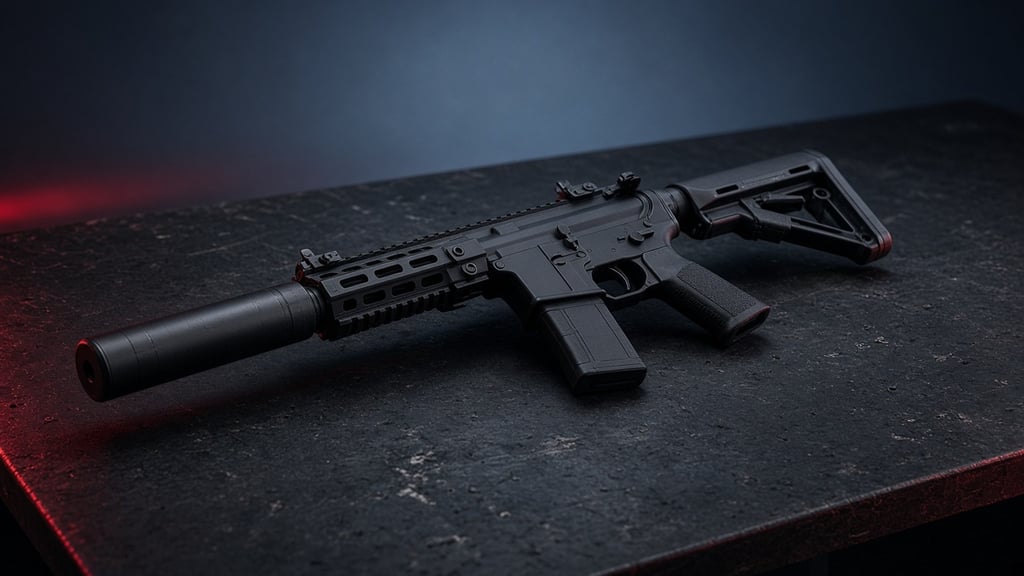
| Suppressor (silencer) | Any device for silencing, muffling or diminishing the report of a portable firearm, including parts intended only for building one | $0 |
| Short-barreled rifle (SBR) | A rifle with a barrel under 16 inches, or a weapon made from a rifle with an overall length under 26 inches | $0 |
| Short-barreled shotgun (SBS) | A shotgun with a barrel under 18 inches, or a weapon made from a shotgun with an overall length under 26 inches | $0 |
| Any other weapon (AOW) | A catch-all for certain concealable weapons that aren’t ordinary pistols or revolvers, such as a smooth-bore pistol built to fire shotgun shells | $0 |
| Machine gun | A weapon that fires more than one shot automatically with a single function of the trigger, including conversion parts | $200, all NFA rules apply |
| Destructive device | Explosive devices such as grenades, plus weapons that fire by explosive with a bore over one-half inch, except shotguns recognized as suitable for sporting use | $200, all NFA rules apply |
Civilians can generally own only machine guns that were lawfully possessed before May 19, 1986, under 18 U.S.C. § 922(o).
Nevada: Why Registration Still Matters Here
Nevada is a friendly state for NFA owners, but our statutes were written around federal registration. ATF’s FAQ says it “cannot opine” on whether an unregistered item counts as lawfully held under state law.
- Suppressors and machine guns (NRS 202.350): Nevada bars making, selling, possessing or using a machine gun or silencer “unless authorized by federal law.” A violation is a category C felony. The exception covers anyone “licensed, authorized or permitted” under federal law, and the burden of proving that is on the person who has it.
- SBRs and SBSs (NRS 202.275): Knowingly possessing, making or disposing of one is a category D felony unless an exception applies. For a private citizen, the main exception is a rifle or shotgun “registered with” the federal government. The statute still names the Department of the Treasury, the registry’s former home.
Nevada buyers still need an approved ATF Form 4 for a suppressor, SBR or SBS. ATF’s October 9 guidance makes federal filing voluntary, but that doesn’t remove the requirement here: NRS 202.350 allows a silencer only when it’s authorized by federal law, and NRS 202.275 requires a private citizen’s SBR or SBS to be federally registered. With the tax at $0, the approved Form 4 costs you time, not money.
If you’re thinking about possessing an unregistered NFA item in Nevada, talk to a Nevada firearms attorney first.
CLEO notification
The federal rule for a Form 4 (27 CFR 479.84) calls for a copy to go to your chief law enforcement officer, such as your local sheriff or police chief, before you submit. It’s a notification, not a sign-off. It still applies in full to machine guns and destructive devices. For the Form 4 that Nevada buyers still need on a suppressor, SBR or SBS, follow the current form’s instructions.
How NFA Purchases Work at 2A Guns
2A Guns is a licensed FFL and Class 3 SOT dealer in Henderson, and we work by appointment only. Here’s how we handle NFA sales today:
- Age: You must be 21 or older to buy any NFA item from 2A Guns.
- Paperwork: Nevada buyers still need an approved ATF Form 4, with fingerprints, a photo and registration, for a suppressor, SBR or SBS. ATF’s voluntary federal filing doesn’t remove that requirement under Nevada law (NRS 202.350).
- Fingerprints and photo: For local NFA purchases, we arrange fingerprints and the photo with a nearby partner shop, and that’s included in the transfer fee.
- Dealer-to-dealer transfers: An ATF Form 3 is required for every dealer-to-dealer NFA transfer, in every state.
- Background check: Pickup in Henderson happens by appointment, after the Form 4473 and background check.
- No home shipping: Firearms never ship to a buyer’s home. They go to an FFL or are picked up by appointment.
Our purchasing NFA items page walks through each step. You can also browse our suppressors, and see FFL transfers for current transfer pricing.
The Bottom Line
Federally, the tax on suppressors, SBRs, SBSs and AOWs is $0, and ATF has paused approval and registration for them. In Nevada, you still need an approved Form 4 for a suppressor, SBR or SBS, every dealer-to-dealer NFA transfer still requires a Form 3, and the federal policy could change.
This article is general information, not legal advice. NFA law, ATF policy and court rulings are changing quickly. Check ATF, the Nevada Revised Statutes or a Nevada firearms attorney for your situation. Information checked October 23, 2026.
Questions? Call or text 702-566-5640 or schedule an appointment.
KEEP READING
More articles
Questions about this article?
Call or text 702-566-5640, or schedule an appointment — we’re happy to help.